
Introduction
Craftsmanship is often described through visible gestures: a hand-guided stitch, a polished edge, a carefully selected hide. Yet the quality of a finished object is determined well before any of those details can be admired. It begins with judgment.
Intentional craftsmanship is the discipline of making every decision serve a defined purpose. The material must suit the object. The proportions must support its use. The construction must withstand repeated handling. The finishing must enhance the design without disguising the nature of the material. Nothing is included merely because it is decorative, familiar, or easy to produce.
This approach differs fundamentally from manufacturing that begins with speed, target cost, or visual imitation. A product can appear refined in a photograph and still reveal weak structure, poorly skived leather, imprecise edges, or unsuitable reinforcement after only a short period of use. True craftsmanship must be evaluated not only at the moment of purchase, but across the life of the object.
At Maison Viven, our standard is simple to state and demanding to follow: every element should contribute to beauty, utility, durability, or ease of use. When a detail contributes to none of these, it should be reconsidered.
 .
.
The Material Must Suit the Object
Premium material is not automatically appropriate material. A leather that performs beautifully on a soft travel bag may be too yielding for a structured wallet. A hide with pronounced natural character may be ideal for a large panel yet unsuitable for a narrow card slot that requires consistency and precise folding. Selection therefore begins with the intended function of the product.
Grain, temper, tensile strength, thickness, finish, and aging behavior all influence the final result. The maker must understand how the leather will respond to skiving, folding, stitching, edge painting, reinforcement, and daily contact with the hand. A beautiful hide used without this understanding can produce an object that is attractive but unstable.
“The finest material cannot rescue an unresolved design. Material, construction, and purpose must be considered together.”
Intentional craftsmanship does not ask only, “Is this leather luxurious?” It asks, “Is this the correct leather for this particular object, at this thickness, with this construction, for this type of use?”

Why Full-Grain Leather Matters
Full-grain leather retains the outermost natural grain layer of the hide rather than having that surface heavily sanded away to remove visible variation. Because the strongest fiber structure is preserved, well-selected full-grain leather can offer exceptional durability while developing greater depth and character through use.
Its value, however, should not be reduced to a label. Not every full-grain hide is equally refined, and full-grain leather is not the correct answer for every component. Quality depends on the source of the hide, tanning process, finishing, consistency, cutting yield, and suitability for the product being made.
Characteristics We Examine
· Natural grain and surface character
· Temper: the balance between softness and structural resistance
· Thickness consistency across usable cutting areas
· Color depth and uniformity appropriate to the design
· Response to folding, skiving, stitching, and edge finishing
· Expected patina and long-term handling behavior
The objective is not to eliminate every natural variation. It is to understand which variations express authenticity and which would interfere with construction, consistency, or longevity.
Proportion Is a Form of Craftsmanship
Craftsmanship is not limited to manual execution. It also exists in the restraint and precision of the design. A wallet that is a few millimeters too wide may feel cumbersome in the pocket. Card slots cut too tightly can be difficult to use; cut too generously, they may lose security as the leather relaxes. A travel bag can be beautifully stitched yet poorly balanced when carried.
These are not abstract concerns. Proportion affects touch, movement, capacity, visual balance, and long-term performance. This is why prototypes must be handled, loaded, carried, opened, closed, and examined from multiple angles. A drawing establishes intent; a prototype reveals reality.
The most resolved objects often appear simple because the complexity has been addressed before the customer sees it. Their ease is not accidental. It is the result of repeated measurement, correction, and removal.

Small Details Carry Structural Consequences
Stitch length, seam allowance, thread tension, leather thickness, skiving transitions, reinforcement, corner geometry, and edge preparation may appear to be minor technical choices. In reality, each influences how the product looks, feels, and survives repeated use.
Edge finishing is a clear example. A painted edge may look smooth when new, but lasting quality depends on the preparation beneath the visible surface. The layers must be aligned, shaped, sealed, coated, dried, sanded, and finished with patience. Applying more paint cannot compensate for a poorly prepared edge.
The same principle applies to stitching. Uniformity matters visually, but placement matters structurally. Stitching too close to an edge can weaken the seam. Excessively dense perforations can compromise delicate leather. A responsible maker balances precision with the properties of the material.
Intentional craftsmanship is therefore not an accumulation of decorative signs of luxury. It is the controlled relationship between material, method, and use.

Inspection Is Part of Making
Quality control should not be treated as a final attempt to separate acceptable products from unacceptable ones. By the time an object reaches final inspection, many of its essential qualities have already been determined. Effective quality control begins with documented standards, approved materials, controlled processes, and clear reference samples.
Final inspection remains essential. The product should be examined for dimensions, symmetry, stitch consistency, edge finish, hardware operation, lining, surface marks, cleanliness, and overall presentation. It should also be handled as its owner will handle it. Card slots must accept cards. Closures must operate smoothly. Handles must sit correctly. The object must function, not merely pass visual review.
The purpose of inspection is not to pursue an artificial perfection that erases all evidence of natural material or human work. It is to ensure that variation remains within the boundaries of the design and never compromises performance.
 .
.
The Object Should Improve Through Use
A leather object begins a second stage of its making when it enters daily life. The hand changes the surface. Repeated opening and closing softens specific folds. Light, air, and contact deepen the tone. These changes can give the object greater individuality, but only when the original material and construction are capable of aging coherently.
Patina is not a substitute for durability, nor is every form of wear desirable. A product should retain its proportions, hold its contents securely, and continue to perform its intended function. Graceful aging means that signs of use add character without causing the object to lose integrity.
This long view changes the maker's responsibility. The product is not designed only for the day it is photographed or unboxed. It is designed for the years that follow.

The Maison Viven Perspective
Designed With Purpose, Refined Without Excess
Maison Viven is being built around a belief that luxury should be understood through discernment rather than display. We are interested in objects whose quality can be felt through proportion, material, construction, and repeated use—not through unnecessary complication.
This requires patience. Samples must be questioned rather than merely approved. Materials must be compared in context. Details must be assessed not only individually, but as part of the whole. The standard becomes meaningful only when it guides difficult decisions, including the decision to revise, simplify, or begin again.
Intentional craftsmanship is ultimately a form of respect: for the material, for the people who make the object, and for the person who will live with it.
“Craftsmanship is not one beautiful detail. It is the discipline that connects every detail to the purpose of the object.” — Maison Viven
Frequently Asked Questions
What is intentional craftsmanship?
Intentional craftsmanship is a disciplined approach in which material, proportion, construction, finishing, and inspection are chosen to support the purpose and long-term performance of an object.
Is handmade always better?
Not automatically. Handwork can offer control, flexibility, and character, while well-selected machinery can improve consistency and precision. Quality depends on whether each method is appropriate, skillfully executed, and governed by a clear standard.
What makes full-grain leather desirable?
Full-grain leather retains the natural outer grain layer of the hide. When carefully selected and properly finished, it can provide durability, natural character, and the ability to develop a rich patina through use.
Why can two pieces of natural leather look slightly different?
Natural grain, pores, and subtle markings vary across a hide. Responsible selection controls variation that would affect construction while preserving the authentic character of the material.
Why do leather thickness and skiving matter?
Thickness influences structure, flexibility, and bulk. Skiving reduces thickness in selected areas so folds, seams, and layered components remain refined without weakening the product.
How can a customer recognize well-made leather goods?
Look for balanced proportions, consistent stitching, cleanly prepared edges, secure hardware, appropriate structure, functional pockets, and materials that feel suited to the object rather than selected only for appearance.
Does patina mean the leather is wearing out?
Not necessarily. Patina is the gradual change in color, sheen, and surface character caused by handling and exposure. Graceful patina adds character while the object retains its structure and function.


A journey begins before the door closes. Explore how the quiet ritual of preparing to leave can clarify what we need, what we carry, and what deserves to come with us.Meta Description: Explore the ...
Read more
The Quiet Discipline of Buying Less, Better
Buying less, better is a discipline of selection. Explore how purpose, quality, restraint, care, and time can lead to fewer, more enduring possessions
Read more
The Objects that Earn a Place in Our Lives
Why do some possessions become indispensable while others are quickly replaced? Maison Viven explores usefulness, familiarity, quality, patina, and the value of objects made to be kept.
Read more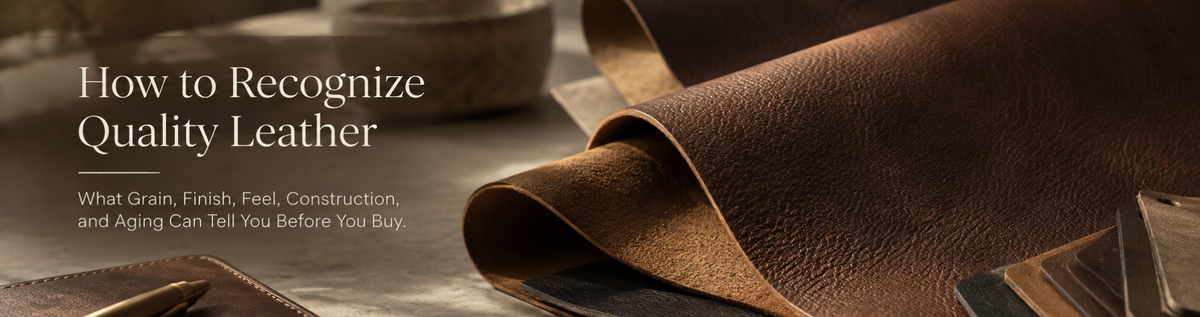
How to Recognize Quality Leather
Learn how to evaluate quality leather by understanding grain, finish, feel, construction, and aging—and why no single label, price, or country of origin tells the whole story.
Read more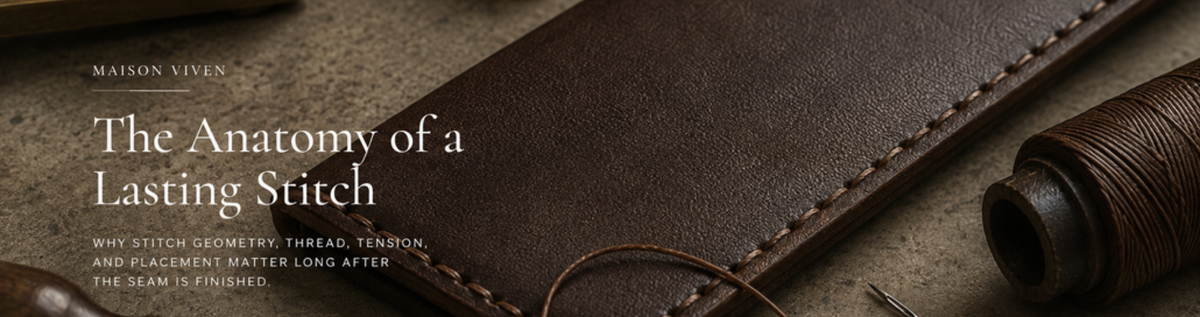
The Anatomy of a Lasting Stitch
Discover how stitch length, thread, tension, edge distance, and seam geometry influence the durability and refinement of well-made leather goods.
Read more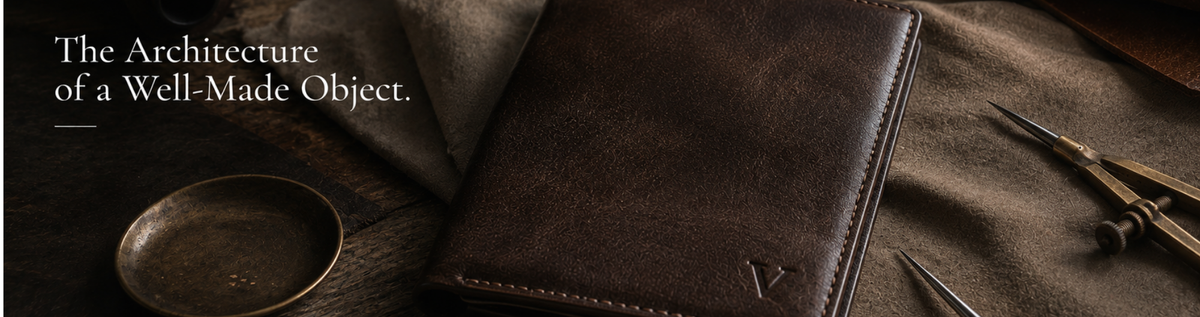
The Architecture of a Well-Made Object
Discover the hidden architecture of well-made leather goods—from reinforcement and skiving to lining, hardware, and structure designed for years of use.
Read more