
Introduction
Buying less, better is not simply a preference for fewer possessions. It is a discipline of selection. It asks us to slow the moment between wanting something and owning it long enough to decide whether the object deserves a place in our lives.
The objective is not austerity, nor is it to make every purchase expensive. Price and quality are not the same thing. The more useful question is whether an object is appropriate to its purpose, made with sufficient care, satisfying to use, and likely to remain relevant after the novelty of acquisition has passed.
At Maison Viven, thoughtful ownership begins with this distinction: fewer objects can create greater value when each one is chosen with greater intention.
The Purchase Begins With a Question
Before asking what to buy, ask what the object is expected to do.
A considered purchase starts with purpose. Will it be used frequently? Does it solve a real need? Does it replace something that no longer serves well, or merely duplicate something already owned? Will its proportions, materials, construction, and maintenance requirements suit the way it will actually be used?
This is a quieter form of discernment than shopping by trend, promotion, or impulse. It moves attention away from the excitement of acquisition and toward the quality of the relationship that may follow.
Better Does Not Automatically Mean More Expensive
The language of quality is easily confused with the language of price. They overlap, but they are not interchangeable.
A higher price may reflect better materials, more demanding construction, skilled labor, smaller production runs, or greater attention to finishing. It may also reflect branding, distribution, scarcity, or positioning. None of these factors alone proves that an object will serve its owner well.
Better is more demanding to define. It means better for the intended use: appropriate material, sound construction, thoughtful proportions, reliable function, maintainability, and a design that does not depend entirely on a passing fashion.
The disciplined buyer therefore evaluates the object rather than the price signal.

Cost Per Use Is Useful - but Incomplete
An object used repeatedly over many years can provide more practical value than several less satisfying alternatives that are purchased, abandoned, and replaced. This is the logic behind cost per use.
But arithmetic alone does not explain why certain possessions remain with us. Frequency matters, yet so do reliability, familiarity, repairability, tactile pleasure, and the absence of friction. A well-considered object earns its value partly by continuing to perform without repeatedly asking us to reconsider it.
The most successful purchase can eventually disappear from the cycle of searching. We stop comparing it. We stop wondering whether a newer version is necessary. We simply use it.
Restraint Creates Room for Appreciation
Accumulation can make individual objects less visible. When drawers, wardrobes, desks, and luggage are crowded with alternatives, choosing becomes another task.
Restraint changes the relationship. A smaller, coherent group of possessions is easier to understand, maintain, combine, and use. The value is not in emptiness for its own sake. It is in reducing unnecessary duplication so that the objects that remain can perform their roles more fully.
This is especially evident in clothing and travel. A compact wardrobe built around compatible colors, proportions, and levels of formality can create more useful combinations than a larger collection of unrelated pieces. A thoughtfully packed weekender can make a journey easier precisely because fewer decisions remain.

Waiting Is Part of Choosing
One of the simplest disciplines in thoughtful ownership is time.
Desire often feels most convincing at the moment of discovery. Waiting allows novelty to weaken and purpose to become clearer. If the object still makes sense after the initial urgency has passed, the decision is more likely to be grounded in use rather than impulse.
Waiting also creates space for comparison: not merely between brands or prices, but between the proposed purchase and what is already owned. Sometimes the better decision is to buy the better object. Sometimes it is to repair what already exists. Sometimes it is to buy nothing.
All three can be expressions of good judgment.

Ownership Continues After the Purchase
Buying better carries an obligation: care.
Good materials do not eliminate maintenance. Leather should be kept reasonably clean and dry, conditioned appropriately, and stored with enough care to preserve its structure. Hardware benefits from thoughtful use. Clothing lasts longer when rotated, cleaned correctly, and repaired before small problems become larger ones.
Care is not an attempt to keep everything permanently new. It is stewardship - protecting usefulness while allowing honest signs of ownership to develop.
A repaired edge, softened handle, subtle patina, or carefully maintained surface can make an object more personal rather than less valuable. Longevity is created jointly by design, construction, use, and care.

Knowing When Enough Is Enough
The discipline of buying less, better eventually reaches a point that shopping culture rarely celebrates: enough.
Enough does not mean that nothing will ever be replaced or added. Needs change. Objects wear out. Life introduces new circumstances. It means that acquisition is no longer the default response to interest.
When what we own already serves us well, the absence of a purchase can be a positive decision. Attention can return to use: wearing the jacket, carrying the bag, writing with the pen, taking the journey.
The purpose of thoughtful ownership is not to become exceptionally good at buying. It is to need buying less often.
"The point of buying better is not to own better things. It is to need fewer replacements.” — Maison Viven
Frequently Asked Questions
What does buying less, better mean?
It means purchasing more selectively and prioritizing suitability, usefulness, construction, materials, longevity, and continued satisfaction over accumulation or novelty.
Does buying better always mean spending more?
No. Price can reflect quality, but it can also reflect branding, scarcity, distribution, or positioning. A better purchase is one that is well suited to its purpose and likely to remain useful and satisfying.
How can I tell whether an item is worth buying?
Begin with purpose. Consider how often it will be used, whether it duplicates something you already own, how it is constructed, how it can be maintained, and whether its appeal is likely to survive beyond a current trend.
What is cost per use?
Cost per use considers purchase price in relation to how often an item is actually used. It can be a useful way to think about value, although longevity, repairability, reliability, and satisfaction also matter.
Is buying fewer things the same as minimalism?
Not necessarily. Thoughtful ownership is not about reaching a particular number of possessions. It is about avoiding unnecessary duplication and keeping objects that have a clear purpose in your life.
Why is waiting before a purchase useful?
Waiting reduces the influence of novelty and urgency. It gives you time to compare the proposed purchase with what you already own and to decide whether the need remains genuine.
Should well-made objects always be repaired instead of replaced?
Not always. Repair makes sense when it can restore useful function and the object remains appropriate to its purpose. Replacement may be more sensible when repair is impractical, unsafe, or no longer preserves the object's usefulness.
How does care relate to buying better?
Longevity depends not only on materials and construction but also on use, storage, cleaning, maintenance, and timely repair. Thoughtful ownership continues after the purchase.

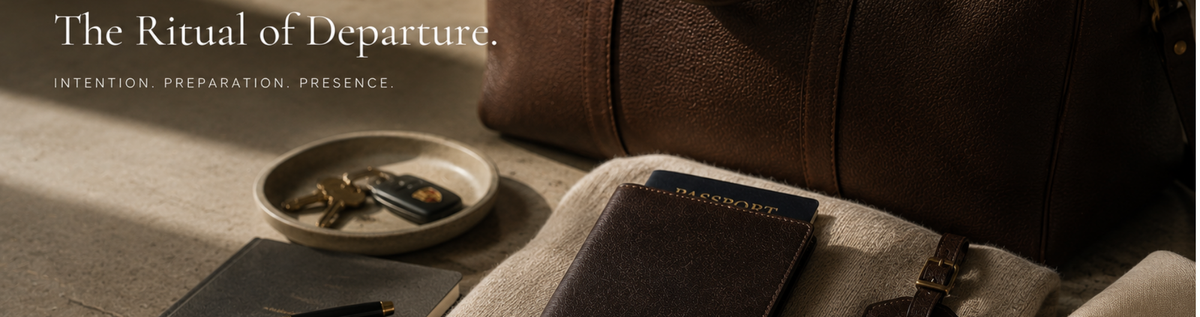
A journey begins before the door closes. Explore how the quiet ritual of preparing to leave can clarify what we need, what we carry, and what deserves to come with us.Meta Description: Explore the ...
Read more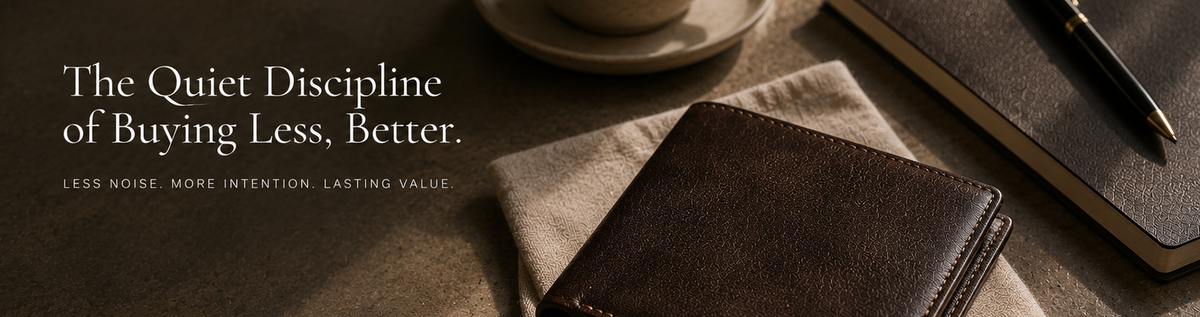
The Quiet Discipline of Buying Less, Better
Buying less, better is a discipline of selection. Explore how purpose, quality, restraint, care, and time can lead to fewer, more enduring possessions
Read more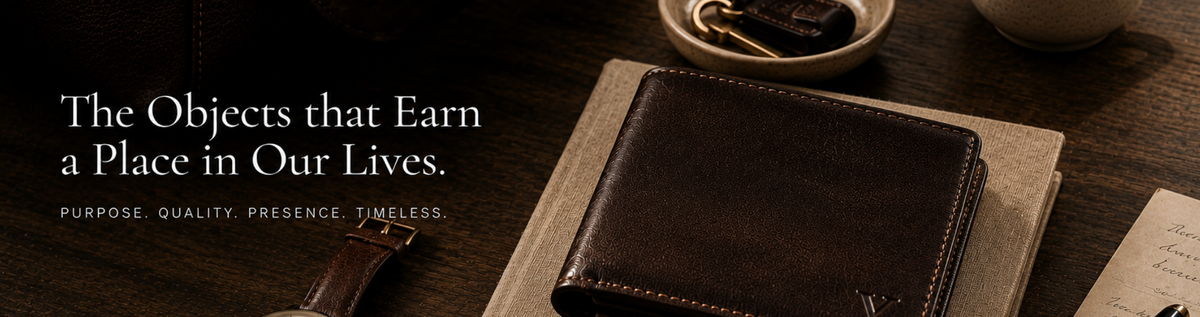
The Objects that Earn a Place in Our Lives
Why do some possessions become indispensable while others are quickly replaced? Maison Viven explores usefulness, familiarity, quality, patina, and the value of objects made to be kept.
Read more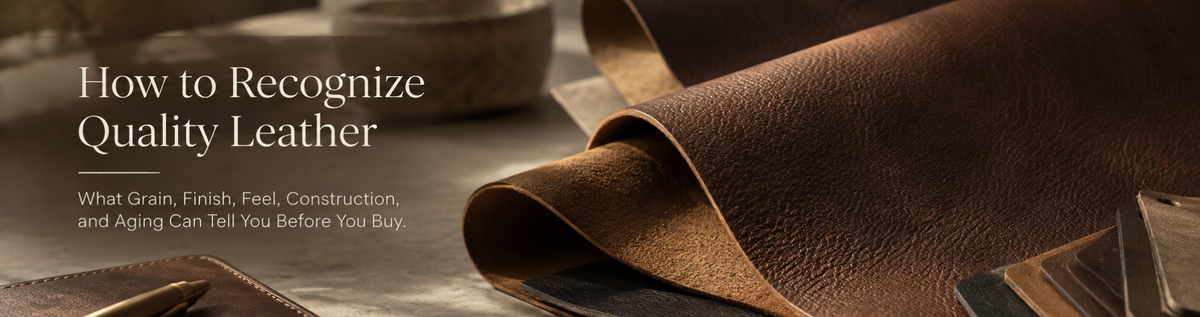
How to Recognize Quality Leather
Learn how to evaluate quality leather by understanding grain, finish, feel, construction, and aging—and why no single label, price, or country of origin tells the whole story.
Read more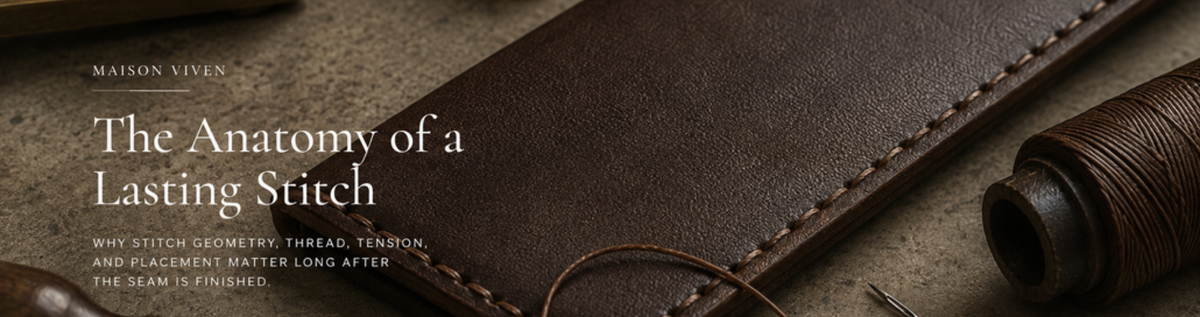
The Anatomy of a Lasting Stitch
Discover how stitch length, thread, tension, edge distance, and seam geometry influence the durability and refinement of well-made leather goods.
Read more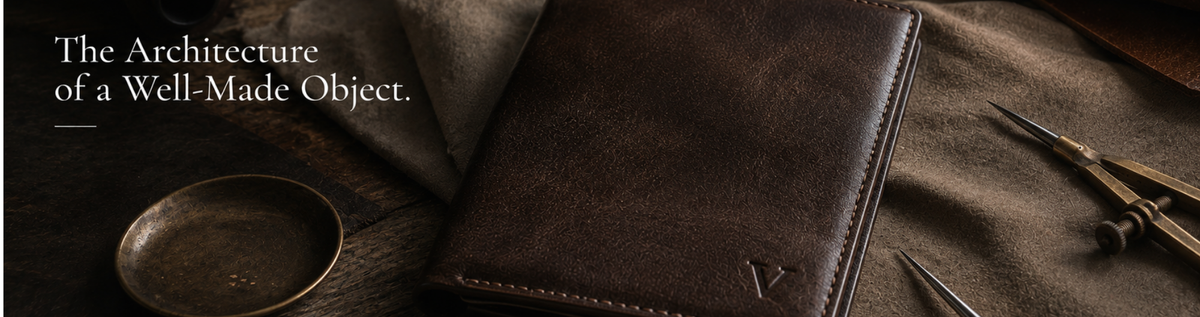
The Architecture of a Well-Made Object
Discover the hidden architecture of well-made leather goods—from reinforcement and skiving to lining, hardware, and structure designed for years of use.
Read more