
How to Recognize Quality Leather
What Grain, Finish, Feel, Construction, and Aging Can Tell You Before You Buy
Introduction
Quality leather is easy to praise and surprisingly difficult to judge. A smooth surface, a high price, a familiar country of origin, or the words “genuine leather” can all influence perception, but none of them alone tells us whether a leather object is well chosen for its purpose.
A better evaluation begins with quieter questions. What part of the hide are we looking at? Has the natural grain been preserved or mechanically corrected? How heavily has the surface been finished? Does the leather feel appropriate for the object it is meant to become? And, just as importantly, has the maker used that material intelligently?
At Maison Viven, we believe leather should be understood rather than romanticized. The goal is not to memorize terminology. It is to learn what the surface, edges, structure, and behavior of a leather object can reveal—and to recognize that quality is ultimately the result of material and construction working together.
Begin With the Grain
 Natural grain is information, not decoration.
The grain is the outer surface of the hide after the hair and epidermis have been removed. In full-grain leather, that grain remains intact: the surface has not been removed by corrective mechanical treatment. Corrected-grain leather, by contrast, has had part of the grain mechanically buffed or otherwise reduced and then enhanced through finishing.
That distinction matters, but it should not become a simplistic hierarchy. Full grain can preserve more of the hide’s natural character, while corrected grain can provide greater visual uniformity and may be entirely appropriate for products that require a more consistent surface. The term describes how the surface has been treated; it does not, by itself, guarantee that the finished product is superior.
When examining leather closely, look for coherence rather than theatrical imperfection. Natural pores, small tonal shifts, and subtle variation can indicate that the surface has not been completely masked. But scars, wrinkles, and variation are not automatically signs of higher quality, nor is an exceptionally uniform surface automatically inferior.
Full Grain, Top Grain, and Corrected Grain Are Not the Same Thing
Leather terminology is often used loosely in retail. One useful distinction is that “full grain” refers to leather whose entire grain surface has been retained without corrective mechanical removal. “Top grain,” however, is broader: it refers to leather from the upper grain layer and can include surfaces that have been lightly snuffed or more heavily corrected.
This is why a label alone should never end the evaluation. Ask what finish was applied, how the leather feels in the hand, whether the surface remains expressive, and whether the chosen leather suits the intended product. A structured travel bag and a soft card holder may legitimately call for different thicknesses, finishes, and levels of protection.
Understand the Finish
 Finish changes what we see, feel, and protect.
Finish is one of the most important—and least understood—parts of leather selection. Aniline leather leaves the natural grain clearly visible, either without a surface coating or with a transparent, non-pigmented coating. Semi-aniline leather introduces a small amount of pigment while keeping the natural grain visible. Pigmented leather uses a more opaque finish that can conceal the natural surface.
More transparency can reveal more of the hide, but it can also mean greater sensitivity to stains, light, moisture, and handling. More pigment can improve uniformity and practical resistance. Neither approach is automatically right or wrong. The useful question is whether the finish creates the balance of appearance, touch, protection, and aging that the object requires.
For an everyday leather good, the best finish is often the one you stop noticing: it protects sufficiently, feels pleasant, and allows the material to develop character without demanding constant attention.
Use Your Hands, Not Only Your Eyes
Leather is tactile material. A photograph can communicate color and grain, but it cannot tell you how the leather bends, rebounds, warms in the hand, or responds when lightly flexed.
Quality leather should feel appropriate to its purpose. A wallet needs enough body to maintain its shape without becoming unnecessarily bulky. A passport companion should open comfortably and allow its pockets to work without fighting the contents. A weekender requires a different balance: enough structure to carry well, enough flexibility to remain comfortable, and enough surface resilience for repeated travel.
Softness alone is therefore not a quality test. Neither is stiffness. What matters is controlled behavior. Flex the product gently. Observe whether the leather folds naturally or feels board-like. Notice whether the surface changes attractively when bent or appears to crack, whiten, or separate. The goal is not a particular sensation; it is evidence that material choice and product architecture belong together.
Look Beyond the Leather Surface
 A good hide cannot compensate for careless construction.
A beautiful hide can still become a mediocre product. Once leather has been selected, cutting, skiving, reinforcement, stitching, edge finishing, lining, hardware, and assembly determine whether the material performs as intended.
Examine the places where stress concentrates. Are stitch lines even and appropriately positioned from the edge? Do pocket openings sit flat? Are corners controlled rather than bulky? Do folded edges feel deliberate? Does edge paint appear smooth and continuous where it is used? Does hardware move cleanly without feeling loose or excessively sharp?
These details are not about chasing microscopic perfection. Handmade and small-batch products can show minor variation. The more useful question is whether the construction looks controlled. Repetition should feel intentional; stress points should appear understood; and finishing should support use rather than simply photograph well.
Do Not Confuse Price With Quality
Price can reflect many things besides material quality: brand positioning, distribution, marketing, retail overhead, scarcity, country of manufacture, production volume, and design complexity. A high price may accompany exceptional leather and construction, but the price itself is not proof.
The reverse is also true. A relatively restrained product can use excellent material and sound construction without signaling those choices loudly. Learning to inspect the object itself shifts attention from the price tag and logo toward the decisions that will determine how the product actually lives.
Country of Origin Is Context, Not a Verdict
Certain regions have deep traditions in tanning and leather-goods manufacturing, and that expertise can matter. But a country name is not a substitute for evaluating the tannery, material specification, product engineering, manufacturing process, and quality control behind an individual object.
Excellent work can emerge wherever skilled people, appropriate materials, clear specifications, and disciplined processes come together. Conversely, a prestigious origin cannot rescue poor leather selection or careless construction. The object still has to prove itself.
Think About How the Leather Will Age
 Good aging is not the absence of change. It is change that remains coherent.
Leather changes through light, oils from the hand, friction, moisture, movement, and time. That change is often described as patina, but not every sign of wear should be romanticized. Healthy aging can include deeper color, a softer hand, gentle burnishing at contact points, and marks that become integrated into the surface. Failure is different: peeling coatings, cracking at flex points, delamination, unstable color transfer, or structural collapse.
Before buying, consider whether you actually want a leather that records use. Highly transparent finishes can be expressive but less forgiving. More protected finishes may change more slowly and remain more uniform. The better choice is the one aligned with how you live, not the one that sounds most luxurious in a product description.
A Practical Five-Minute Evaluation
1. Read the material description carefully. Look for specific terminology rather than broad phrases. Full grain, corrected grain, aniline, semi-aniline, nubuck, suede, and split leather describe different material or finishing characteristics.
2. Study the surface. Look for natural coherence, appropriate grain, and a finish that suits the product. Do not assume that visible imperfection equals quality or that uniformity equals inferiority.
3. Flex and handle the object. Notice how the leather bends, rebounds, and feels at folds, pockets, handles, and corners. The material should behave appropriately for the design.
4. Inspect construction. Look at stitching, edges, hardware, lining, pocket geometry, reinforcement, and high-stress areas. Quality is a system, not a surface.
5. Imagine the object after years, not minutes. Ask whether the finish, structure, and design are likely to become more familiar with use—or merely look impressive while new.
What Quality Leather Really Means
The most useful definition of quality is not “the most natural,” “the most expensive,” or “the most prestigious.” Quality leather is leather whose grain, finish, substance, and performance are appropriate to the object being made—and whose construction allows those properties to endure.
That is why the best leather goods often become easier to understand with time. The surface develops depth. The object settles into use. The construction remains quiet. What initially attracted the eye becomes secondary to something more important: reliability, familiarity, and the sense that the material was chosen for a reason.
The goal is not to become suspicious of every leather label. It is simply to look more carefully. Once you know what to notice, quality becomes less mysterious.
“Quality leather is not defined by a single label. It is revealed by how material, finish, construction, and time work together.” — Maison Viven
Frequently Asked Questions and Answers
· What is full-grain leather?
Full-grain leather retains the entire natural grain surface and has not had that surface removed by corrective mechanical treatment. It can still receive dyes, oils, waxes, or finishes.
· Is full-grain leather always the best leather?
No. Full grain preserves the natural grain, but suitability depends on the product, finish, construction, and intended use. Corrected or protected leathers can be excellent choices when greater uniformity or resistance is desirable.
· What is the difference between full grain and top grain?
Full grain is a specific type of grain leather with the grain surface intact. Top grain is a broader commercial term for leather from the upper grain layer and can include full-grain, lightly snuffed, or corrected-grain leathers.
· What is corrected-grain leather?
Corrected-grain leather has had part of its grain mechanically removed, commonly through buffing, and the surface is then enhanced through finishing. This can improve uniformity.
· What is aniline leather?
Aniline leather has a natural grain that remains clearly visible, with either no surface coating or a transparent, non-pigmented coating. Because the surface is less masked, natural characteristics tend to remain visible.
· Is semi-aniline leather lower quality than aniline leather?
Not necessarily. Semi-aniline leather uses a small amount of pigment while retaining visible natural grain. The added protection and uniformity can make it highly appropriate for frequently handled leather goods.
· How can I tell if a leather product is well made?
Inspect more than the leather. Look at stitch consistency, edge finishing, pocket alignment, folds, reinforcement, lining, hardware movement, and how the product behaves when gently flexed.
· Does expensive leather mean better leather?
No. Price can include branding, distribution, scarcity, labor, design, and retail overhead. Material quality and construction need to be evaluated independently of price.
· Does Made in Italy or Made in France guarantee quality leather?
No. Geographic origin can provide useful context about manufacturing traditions, but it does not guarantee the quality of an individual material or finished product. Specifications, workmanship, and quality control still matter.
· What should good leather look like as it ages?
Depending on the finish, good leather may deepen in color, soften, burnish at contact points, and develop integrated marks while retaining its structure. Peeling, severe cracking, delamination, or structural failure are different from desirable patina.

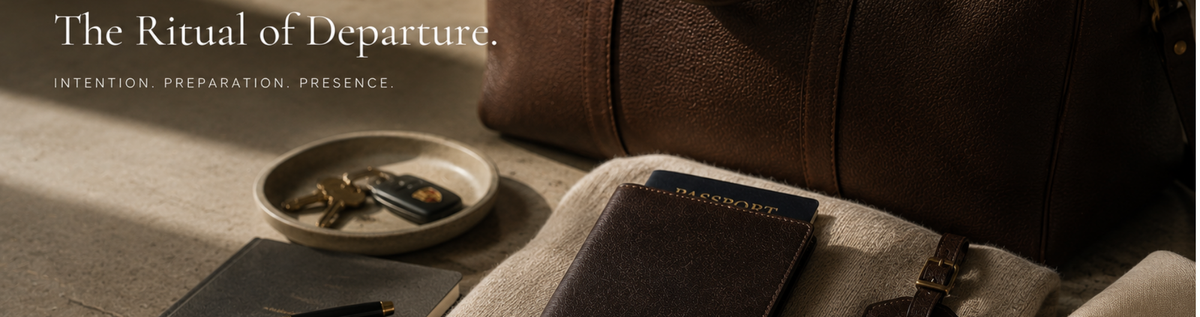
A journey begins before the door closes. Explore how the quiet ritual of preparing to leave can clarify what we need, what we carry, and what deserves to come with us.Meta Description: Explore the ...
Read more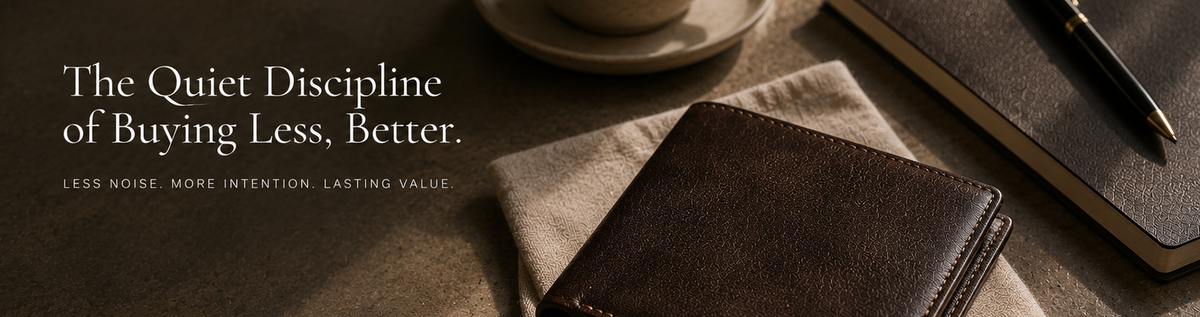
The Quiet Discipline of Buying Less, Better
Buying less, better is a discipline of selection. Explore how purpose, quality, restraint, care, and time can lead to fewer, more enduring possessions
Read more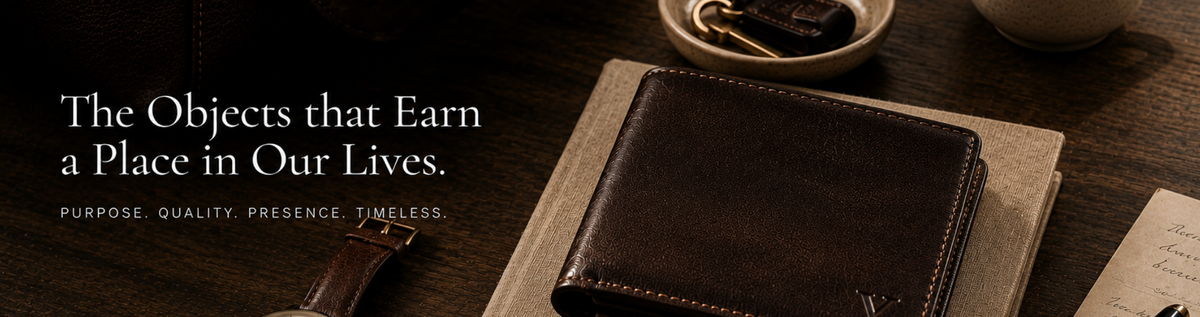
The Objects that Earn a Place in Our Lives
Why do some possessions become indispensable while others are quickly replaced? Maison Viven explores usefulness, familiarity, quality, patina, and the value of objects made to be kept.
Read more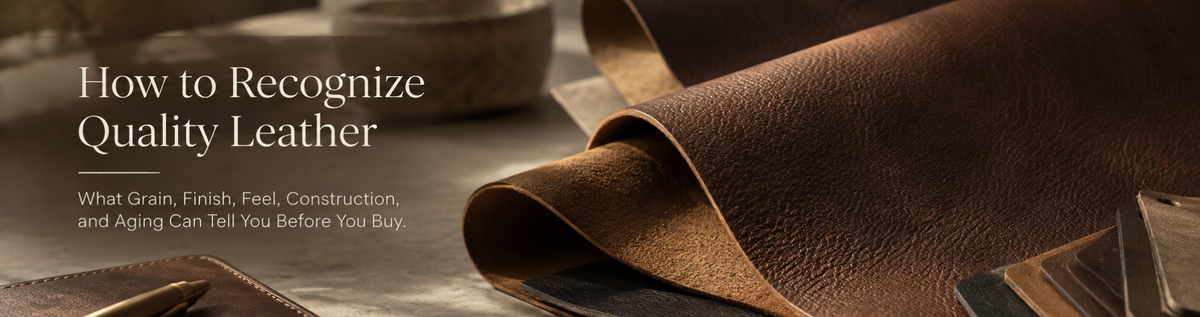
How to Recognize Quality Leather
Learn how to evaluate quality leather by understanding grain, finish, feel, construction, and aging—and why no single label, price, or country of origin tells the whole story.
Read more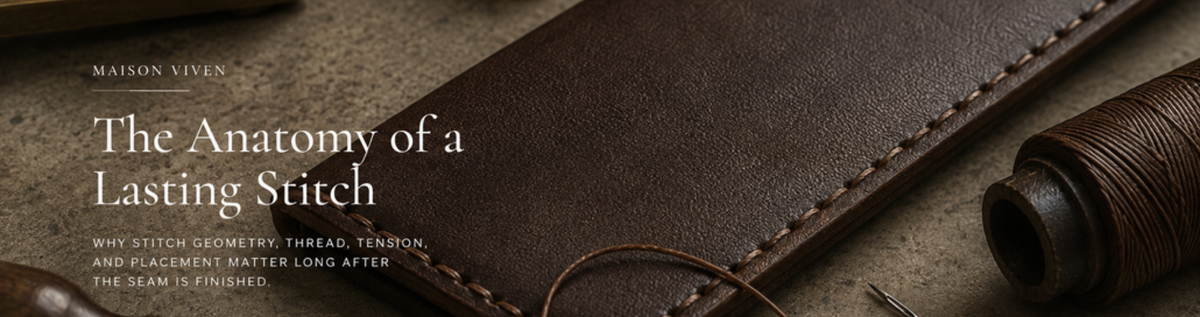
The Anatomy of a Lasting Stitch
Discover how stitch length, thread, tension, edge distance, and seam geometry influence the durability and refinement of well-made leather goods.
Read more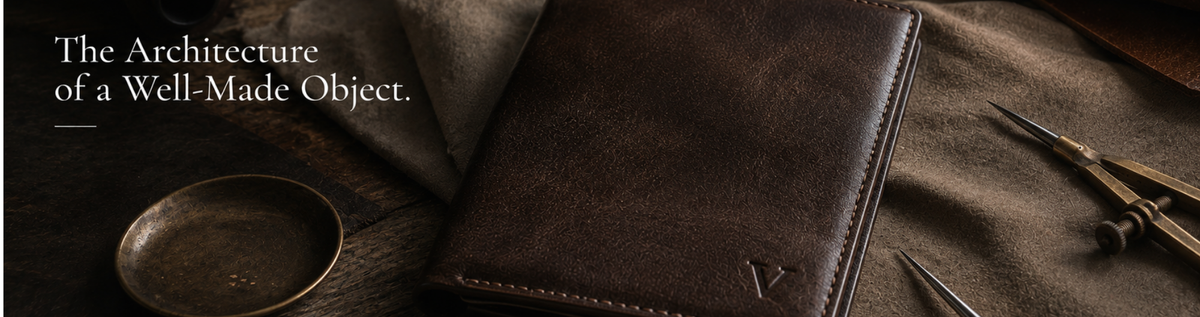
The Architecture of a Well-Made Object
Discover the hidden architecture of well-made leather goods—from reinforcement and skiving to lining, hardware, and structure designed for years of use.
Read more